Autonomous Floor Care for Small Janitorial Contractors in SF
Small janitorial contractors in San Francisco can pilot autonomous floor scrubbers affordably while meeting SF's strict green-cleaning and procurement rules. Here's how to structure a compliant, data-
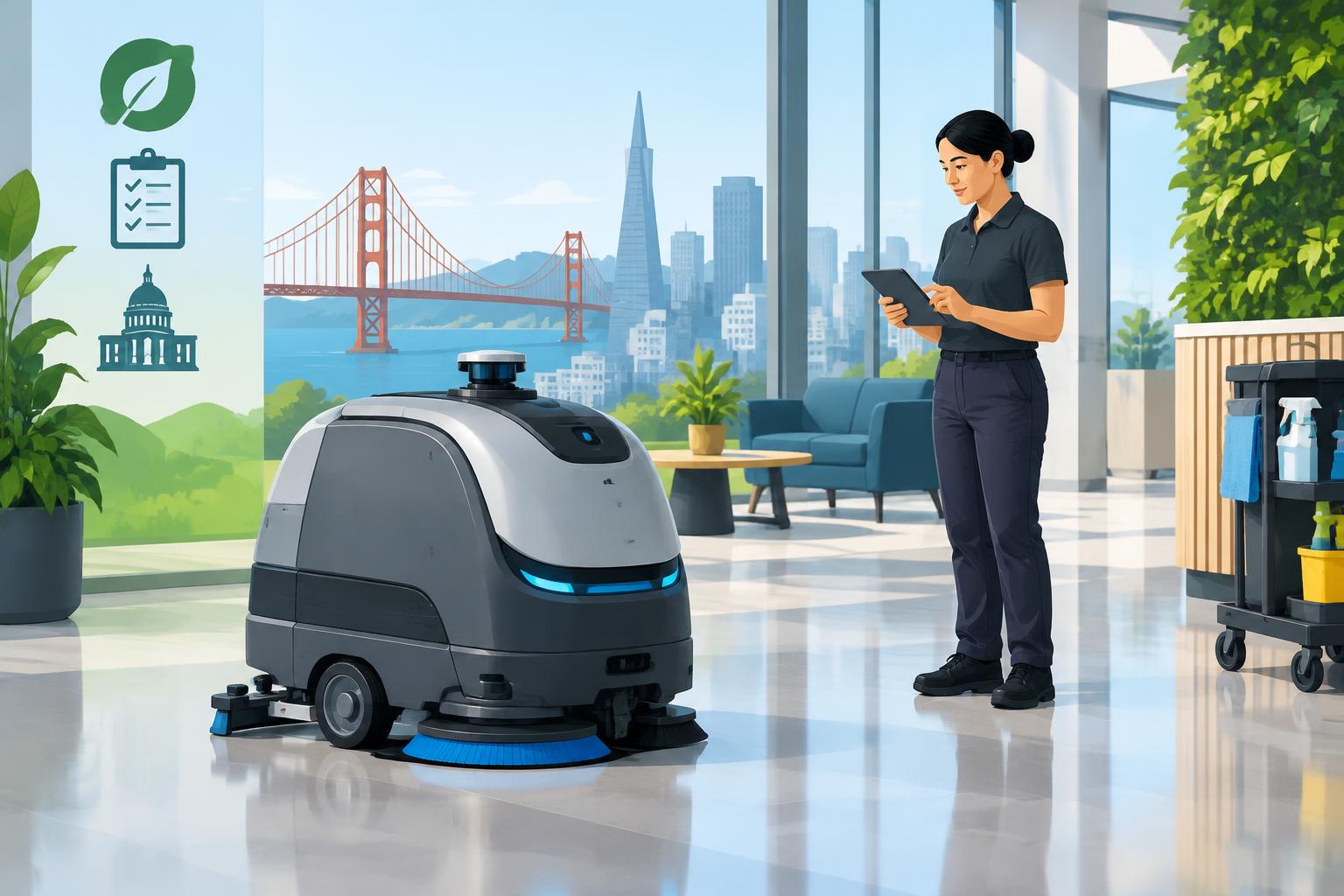
How Small Janitorial Contractors in San Francisco Can Pilot Autonomous Floor Scrubbers Without Breaking the Budget
Running a small janitorial operation in San Francisco means balancing thin margins against some of the most demanding environmental standards in the country. Floor care is often where those pressures converge — it's labor-intensive, hard on workers, and the first thing clients notice when it goes wrong. Autonomous floor scrubbers have moved from novelty to practical option for mid-size facilities, but most of the case studies you'll find involve large distributors or national chains. This post is for the contractor who wants to test the technology at a realistic scale while staying compliant with San Francisco's green-cleaning requirements.
Why Floor Care Is the Right Place to Start With Automation
Floor care consumes more labor hours per shift than almost any other janitorial task, and it carries real liability exposure. According to research compiled by Millennium Facility Services, slip-and-fall losses cost U.S. businesses an estimated $11 billion annually, and deferred cleaning can multiply maintenance costs by a factor of four. For a small contractor offering floor care in San Francisco, CA, those numbers translate directly into client risk — and client loss.
Autonomous scrubbers address two specific pressure points at once: they maintain consistent pass patterns that reduce missed spots, and they free workers to handle detail cleaning, restrooms, and other tasks that genuinely require human judgment. That reallocation, rather than outright headcount reduction, is where small contractors typically find the most immediate value.
It's worth being realistic: a single autonomous scrubber won't transform a five-person operation overnight. But a structured pilot — one machine, one recurring account, tracked over 60 to 90 days — gives you the data you need to justify adding a second unit or negotiating a service-level upgrade with a client.
Understanding San Francisco's Green-Cleaning Rules Before You Buy
Before you sign a lease or purchase agreement on any autonomous scrubber, you need to understand what cleaning products the machine will dispense — because San Francisco has specific requirements that affect both city contracts and best-practice private-sector accounts.
The SF Environment Custodial Green Cleaning program notes that traditional cleaning products increase environmental and health impacts, and that green cleaning practices can reduce employee chemical exposure by up to 70%. That figure matters when you're calibrating the chemical-dosing system on an autonomous scrubber, where consistent dilution is one of the technology's built-in advantages.
On the product side, San Francisco's approved purchasing list requires specific certifications for general-purpose cleaners used on city-related work. According to SF Approved, qualifying products carry labels from the US EPA Safer Choice program, UL Ecologo, Green Seal, or Cradle to Cradle Gold. If you're pursuing any city-affiliated commercial cleaning in San Francisco, CA — including janitorial contracts in municipal buildings or publicly funded facilities — your chemical inventory needs to match these standards before you power up a machine.
The practical implication: when evaluating scrubber models, confirm that the chemical feed system supports the dilution ratios specified on your certified products. Some older or budget machines are calibrated for conventional concentrations and will either over-dispense or under-perform with greener formulations.
Structuring a Pilot That Generates Usable Data
A pilot that isn't measured isn't a pilot — it's just renting equipment. Before the machine goes into service, define the metrics you'll track: square footage cleaned per shift, labor hours reassigned, chemical consumption per square foot, and any client feedback on floor appearance.
Choose an account where floor square footage is large enough to show productivity gains — typically 10,000 square feet or more of open floor — but where the layout is straightforward enough that the machine's mapping and navigation features aren't constantly challenged. Warehouses, open-plan offices, and large retail back-of-house areas are good candidates. Highly compartmentalized spaces, tight corridors, and environments with frequent floor-level obstacles are better suited to a later phase, after your team understands the technology's limits.
For janitorial services in San Francisco, CA, where building stock ranges from Victorian-era mixed-use properties to modern LEED-certified office towers, the right pilot site matters. A mid-century office building with open floor plates is a better first deployment than a historic structure with narrow hallways and irregular room shapes.
Document everything during the pilot. Client satisfaction notes, machine error logs, chemical usage records, and labor hour comparisons will all become part of your case when you approach lenders, equipment vendors, or clients about scaling.
Financing and Procurement Options for Small Contractors
Purchasing an autonomous scrubber outright is rarely the right first move for a small operation. Monthly lease agreements, rental programs through equipment distributors, and robot-as-a-service (RaaS) models — where you pay per square foot cleaned rather than for the machine itself — each carry different risk profiles.
RaaS arrangements, in particular, lower the barrier to entry because they shift maintenance responsibility to the vendor and eliminate large upfront capital costs. The tradeoff is that per-square-foot fees can exceed ownership costs over a multi-year horizon if your utilization is high. Run the math for your specific volume before committing.
For contractors pursuing San Francisco city contracts, procurement compliance is a separate layer. City purchasing rules favor vendors who meet local business enterprise criteria, sustainability benchmarks, and, for cleaning specifically, the green-product standards noted above. Aligning your equipment and chemical choices with those standards from the start — rather than retrofitting later — keeps more contract opportunities open.
Expanding Beyond Floors: Positioning for Full-Service Accounts
Autonomous floor care is a differentiator, but the accounts worth winning in San Francisco typically want a contractor who can handle a broader scope. Once your floor-care operations are running efficiently, that recovered labor time can be redirected toward services that require skilled human execution: post-construction cleaning, move-in and move-out cleaning, window cleaning, and detailed restroom sanitation.
This positioning matters commercially. A client who sees consistent, documented floor care results is far more likely to expand your scope of work than to bring in a second vendor for other tasks. The efficiency gains from automation, in other words, aren't just operational — they're a business development tool when you can show the numbers clearly.
Take the Next Step With C&A Janitorial Service Inc
If you're a building manager or facility director evaluating janitorial contractors in San Francisco who can deliver both compliant green-cleaning practices and modern floor-care technology, C&A Janitorial Service Inc is ready to discuss what a structured pilot could look like for your facility. Reach out directly to start a conversation about your building's specific floor care needs, compliance requirements, and service scope.
About this illustration
This editorial image was created with AI. It is not a photograph of an actual customer, property or completed service.